


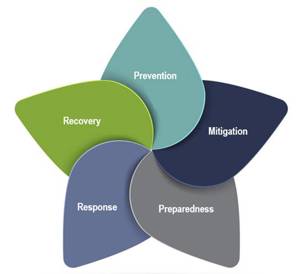
Actions taken to stop an emergency or disaster from occurring. Such actions may include legislative controls, zoning restrictions, improved operating standards/procedures and critical infrastructure management.
Prevention strategy objective
It is important to address whether hazards can be stopped or avoided and be aware of any vulnerabilities. In cases where hazards cannot be stopped from occurring, the use of appropriate avoidance measures can protect life, property, infrastructure, the economy, the environment, and social and governance systems.
Prevention strategies and activities could include the following:
-
Hazard-specific control programs:
-
Activities to avoid the adverse impacts from potential flooding events including building levees, dams, floodways, spillways, hydraulic control structures, control gates, flood detention basins and performing drainage system improvements such as river-dredging to prevent floods.
-
Building design practices and the utilization of construction materials that increase the capacity of a structure to resist extreme weather events and chemical, biological, radiological, nuclear, explosives (CBRNE) as well as other physical security threats.
-
Preventing forest fires through regulating personal fires, conducting controlled burning and mechanical treatment activities to improve forest health.
-
-
Critical infrastructure protection and management: Ensuring that disaster risk reduction priorities drive emergency management programs with a clear understanding of the impact of climate change on natural hazards.
- Designing critical infrastructure to withstand adverse conditions or technical failures.
- Critical Infrastructure consists of:
- Food and Water
- Telecommunication Systems
- Electrical Power System
- Gas and Oil
- Financial Services
- Health System
- Transportation Networks
- Public Safety and Security
- Continuity of Government
- Critical Infrastructure consists of:
- Designing critical infrastructure to withstand adverse conditions or technical failures.
-
Legislative and Regulatory Controls:
- Land-use planning
- Building codes
- Zoning restrictions
- Improved operating standards/procedures.
-
Cyber security initiatives
- Public health strategies
-
Warning systems
-
Public education and training
-
Hazardous material safety initiatives
-
Financial support through grants, subsidies and preferential tax codes and deductibles.